
Hiring on instinct, launching early: building a tax technology team
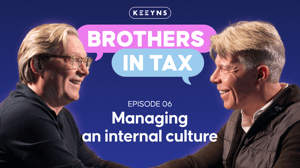
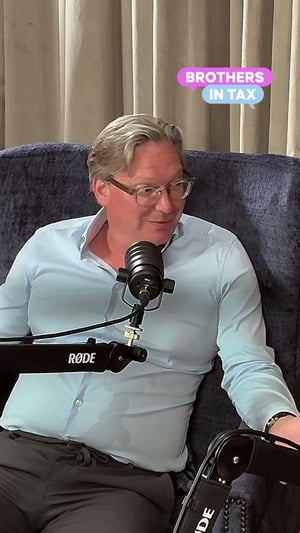
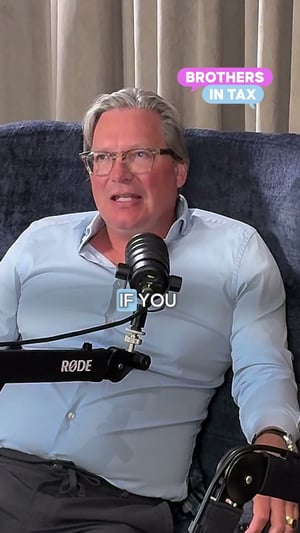
Keeyns started in 2017 as Taxperience IT Solutions, with two developers and a client case no existing tool could solve. In episode 6 of the Brothers in Tax podcast by Keeyns, Ruben hosts as he and Ramon van Aarle talk about hiring on trust, why tax experts and developers need each other, the strategy shift buyers pushed them into, and the mistakes they'd undo, starting with launching too early.
Episode 6 · 27 min · October 1, 2026 · Hosts: Ruben and Ramon van Aarle
Short on time? Read the 5 key takeaways or jump to the FAQ.

Five things to take from this episode
For the client case in 2017, "There was nothing out there." Companies had focused on ERP systems like SAP and Oracle, and tax is only now catching up. [02:52]
The brothers can't code: "today we still can't code. So we fully have to rely on them". The developers build what the tax experts know, and Ramon calls that combination the real magic. [06:56]
Early VAT engines for the Netherlands and Belgium met the same answer: "please come back when you have rolled it out for entire Europe." Keeyns moved to a tax operations platform instead. [10:51]
Ramon's honest mistake: "we pushed the product too fast into the market." The early feedback worked as "a lengthy research programme". [12:22]
"We clearly built top down", Ruben says: senior leads for marketing, development, customer success and finance, each owning their area. [16:39]
Short on time? Start with these
Questions answered in this episode
Because "There was nothing out there." A Taxperience client needed control over its VAT compliance in 2017 and no existing tool fit. Companies had invested in ERP systems like SAP and Oracle, and tax is only now catching up. [Listen at 02:52]
Coverage across all their countries. When Keeyns built VAT engines country by country, buyers said "please come back when you have rolled it out for entire Europe." That pushed the product toward a tax operations platform: control tower, tax management and collaboration. [Listen at 10:51]
Launch later and raise money earlier. Ramon: "we pushed the product too fast into the market", and a more solid business case for the first five years is the change he would make. [Listen at 12:22]
Larger international groups. Ramon says larger international companies like the product most, and "it's not for the small companies." [Listen at 15:58]
Trust the people who can. Ramon: "today we still can't code. So we fully have to rely on them". The brothers hired senior leads top down and let them own their areas. [Listen at 06:56]
About the hosts
Ruben van Aarle
CEO and co-founder, Keeyns
Started his career at Arthur Andersen (later merged into Deloitte), co-founded the tax advisory firm Taxperience in 2006 and co-founded Keeyns in 2017. Follow on LinkedIn
Ramon van Aarle
COO, co-founder, Keeyns
Started at Ernst & Young, moved to Arthur Andersen and co-founded Taxperience with Ruben. Follow on LinkedIn
Together they have 25+ years in tax as advisors, entrepreneurs and now software founders.
About Brothers in Tax
Brothers in Tax is the podcast by Keeyns. Ruben and Ramon van Aarle have 25+ years in tax as advisors, entrepreneurs and now founders of Keeyns, the tax management platform for multi-entity companies. Each episode is their unfiltered take on the industry they've helped shape: the wins, the mistakes and the lessons in between.
See all episodes · Subscribe on Spotify · Subscribe on Apple Podcasts
Keep listening

Why the brothers stepped out of advisory and bet on software.
Listen now
25 years from paper returns and the fax queue to AI, and the client case that became Keeyns.
Listen now
The businesses they built, bought and sold, and the one rule they never break.
Listen nowFull transcript
Lightly edited for readability.
Ruben [00:43]: Hello everyone. My name is Ruben van Aarle and I'm here together with my brother Ramon.
Ramon [00:51]: Hello, my name's Ramon,
Ruben [00:52]: And together we are Brothers in Tax. Welcome to our podcast where we will talk about our years in tax, what is happening with tax technology and our business endeavours. Last episode, we talked about the tax team of the future, the skills, the roles, and how the function is evolving. But before you can build the tax team of the future, you need to know how to build the team at all. Right? We went all in on SaaS back in 2017, started with a team of three, and last month we welcomed our newest addition, which makes it 35 today. And today we're also gonna talk about that journey, right? How to build a work culture that we are very proud of. Can you talk a little bit how we actually started Keeyns?
Ramon [01:43]: Yeah. Keeyns, we started Keeyns in 2017. Basically. The name was Taxperience IT Solutions because it formed a legal entity within the Taxperience group back then. And we later on renamed it to Keeyns. So basically it was a client case. They asked for tax tooling, which was basically the birth of Keeyns back then in 2017. So it's, it first started, if you look at the team with Taxperience people providing tax knowledge. But we, they tax people can't code, right? So luckily for us, we have a joint friend, Johan, who is today the CIO of Keeyns. And we consulted him and he came up with two very good, IT professionals, which we hired straight away because we believed his story that this was the way to go.
Ruben [02:45]: And why didn't we just call someone else and take some other software vendor. Why did we want to build this?
Ramon [02:52]: There was nothing out there. It was that, that's a good point. We looked into the tech industry. Is there a solution for the client? Because we were not about to make it ourselves. That was not, no, that was not our point. But it ended up in let's give it a full push and make it ourselves. 'cause there was nothing out there in the tax field, which could help the client case back then. Strange
Ruben [03:20]: If you think about it, right? So tax is we go back to the Egyptians then the pyramids where they started to charge tax and then. No software
Ramon [03:35]: Even makes me silent. No, it's true. There was nothing. And today it's popping up big time. Right? But that's only, let's say this year, last year, maybe a couple years earlier, but that doesn't really matter. But if you look at the last 25 years, there was not really tax tooling out there. It's also, it's ERP systems, SAP the Oracles. That's where companies focus on. And now I think the tax industry is chasing it.
Ruben [04:03]: True. And you mentioned, yeah, we asked Johan, right, to hire people for us. And can you elaborate a little bit how that process went? Because I, otherwise a nice anecdote about that.
Ramon [04:16]: Well, please share it. Please share it.
Ruben [04:20]: We were having this interview with the first developer and was super nice guy, right? And he was enthusiastic and he seemed very bright. And anyway, he had a lot of questions and we answered a lot of his questions and I said, look, I have a lot of trust in you. And I took my hand. Hired. And he said, but is there not another day? And, what about salaries? He said, we're gonna talk about the five minutes, but you hired already, so can I really? Yeah. It was kind of funny because it's, well, is this something how we do business?
Ramon [04:55]: That is how we do, that was exactly my point. This is how we do business. We were afraid that the very good software developers didn't want to work for us because we were running a tax advisory firm. And luckily they did. And we hired two and one of them is still with us today. So, that's very cool. So that also says something about the Keeyns environment that we created. Otherwise, he probably would've left already. So I think we celebrate his 10 year work anniversary next year. Next week.
Ruben [05:30]: Next week,
Ramon [05:30]: Yeah. I think next week.
Ruben [05:31]: Oh, well,
Ramon [05:32]: And it's this month.
Ruben [05:33]: 10 years. Yeah. And I know, let's say that most, because most of the developers that they always say, yeah, five, six years, and then I'd like to do something else. Why do you think that he still wants to be with us and still is with us?
Ramon [05:51]: Yeah, it's a very good question. My almost guess would be that they are really, it's their baby. Keeyns is their baby, and we started from scratch. So normally IT developers, there is some sort of a product and they have to make it better or change it or whatever. Different colours, different UX. There's something and you that we didn't have anything. So I really think it's like a newborn baby that probably 80% of the developers look at Keeyns like that. It's really it's their product and you also see it and sense it. If we have those discussions of what we're gonna make on a roadmap, it's they fight for the product, which is really, really cool. Absolutely. I'm very proud of that. Yeah.
Ruben [06:36]: But in the end, let's say you, me, together we create this environment, right? So we give a lot of trust to them because we can Yeah.
Ramon [06:46]: We can't code.
Ruben [06:47]: We can't code. We have no idea.
Ramon [06:48]: No. So the, if you compare our work today with the work at Taxperience, we were also tax professionals. And we could say, okay, so you're going on a holiday, I'm gonna do it myself. Enjoy the holiday. And when we're back, the project is finished and today we still can't code. So we fully have to rely on them yet on the other way, on the other hand, they don't have the tax knowledge, so they code what's in our heads. And that's, I think that's real magic at Keeyns happening, right? So we combine maybe 50, 60, 70 years of experience in, into the tax practice together and also the financial practice. 'cause we also have financial people working at Keeyns. And they code it and we, as you know, we make it for the clients and not for the advisory practice. So it's that, that's really nice and one of the biggest challenges for us. But also to me, it's I like that best. If you could compare the careers tax and now the IT part, this is really cool.
Ruben [07:58]: Yeah, no, that's a different, it's totally different company. I have to agree. And when did we start hiring more people? How did, how was that journey? 'cause we started in 2017, but yeah, that was just black screen. One thing, flickering
Ramon [08:17]: Yeah, there was nothing. There was nothing. And they needed the best equipment, the most expensive computers and screens. And we didn't, we had no idea. We didn't even know that they were a for sale. So we just said, okay, is this is what you need? We're gonna buy it for you and we're gonna work together and we gonna create a product. But then in IT, you never know when the product is ready to go into the market. And that was a journey for I think a couple of years.
Ruben [08:46]: And,
Ramon [08:47]: And,
Ruben [08:47]: But when did we start hiring more people? Was it after one year, two years, three years?
Ramon [08:53]: Yeah. I think we, after three to four years, we, I think we hired more people.
Ruben [09:02]: To gear up or, because we saw it wasn't going fast enough or it was not both. Both, yeah.
Ramon [09:10]: Yeah. Both. And then, and it's all in the paper. So we got the private equity on board in the year 2024. We worked on that money raising project in the year before. So then we had more, well, more budget to really scale Keeyns, and that's what we did. So I think then we hired maybe 15 to 20 people in one year, which is a lot for a scale up company. And it gives all sorts of, well challenges in that particular year.
Ruben [09:46]: Absolutely. And do you think that our strategy basically over the years when we started with Keeyns and where you see where is the product today? Is our, has our strategy changed or have we always had, let's say, kind of a step at the horizon where to go?
Ramon [10:05]: Yeah. The step at the horizon that's in our head. And obviously it's not a direct way to the step at the horizon and always skate where the puck is going, but I would say the first vision in 2017, that's still what we're making.
Ruben [10:18]: Yeah. I agree with you.
Ramon [10:20]: Yeah. What do you think is the one, can you give an example of a thing we did change over the years?
Ruben [10:27]: Well, I think what we shifted a little bit was basically the client case at that time was a pure, VAT compliance question, which we basically already brought on for the other tax topics. We started to build the VAT engine for the Netherlands, for Belgium. But we kind of gave up on that. Not only because the engines were not good, but it takes a lot of time, A, to build, B, to maintain. And we had the discussions with potential customers that they always ask, let's say, please come back when you have rolled it out for entire Europe. And now they would say for entire MENA as well, and then and the world. So it would take us too long. Right. That's true.
Ramon [11:17]: That's probably the,
Ruben [11:18]: We changed basically more to a tax operation platform. Tax control tower,
Ramon [11:27]: Tax management,
Ruben [11:27]: Tax management,
Ramon [11:28]: Tax collaboration. Right. Those are the four or five phrases that fit the most. That's true,
Ruben [11:36]: I think too,
Ramon [11:36]: But that was already in our heads back in 2017.
Ruben [11:40]: That's true. Yeah. We always had it in the back and yeah, it was, it's kind of a small shift. Right. And if you don't see this journey, have you any, let's say they say, okay, wow, this was a great win. Or any f-ups, so to say.
Ramon [11:56]: Well, the let's start with the f-ups. Probably not. Well, not really, because I think doing business and creating a new tooling into a new landscape had the tax technology landscape that didn't really even exist back in 2017. Today you have tax technology directors it's a job back then that was just doesn't
Ruben [12:21]: Exist then.
Ramon [12:22]: No, not at all. Didn't exist. So try to put the new, it's like Tesla putting the, nobody really wanted the car, but it became a huge success. Right. So I don't really see that we fops. I don't know, but probably we pushed the product too fast into the market.
Ruben [12:41]: I think that's true. And we were very, very early.
Ramon [12:45]: Very, very early. And if you look back, I think we. We should seek for more money. Back in those days already, there was a learning curve. Could we as a tax practice create tax tooling with the money we made? With the tax advice question mark That was basically, but we didn't really, we just did it. But if you look back then probably a more solid business case for the first five years, that will be my best pick. That will be a change I would make today.
Ruben [13:21]: I totally agree with you. We would probably also be a little bit further, I think. Yeah. But yeah, honest truth is just that we didn't have deeper pockets to hire more people to work on the products.
Ramon [13:35]: No, it's very costly. And then you don't even count for the hours and hours and hours of tax files, which we got for free because we had 80 people working at Taxperience. But if you don't have own tax practice and you want to create tax software, wow. What would be the budget? It's probably, yeah. It's not, it's
Ruben [13:56]: Not, it's not an easy journey. The we walk this path together. It's very challenging on the people side the money side. Yeah. And now on the customer side, because Yeah, of course, we, and we came very early with the product that people Yeah.
Ramon [14:18]: But they, the people saw the product immediately. They didn't buy it. That's at that point in time. But they saw it, so they just said, okay, continue. Right. That continue with this journey and call me back in 12 months. And we did. So it's,
Ruben [14:37]: And we always talk about the MVP Right. For new features, but it was in the beginning too much m it was not a viable product yet. And there be different ballgame.
Ramon [14:49]: No, but we are optimistic and that comes with the entrepreneurial part of running a business that, that's true. So, you never know about timing. Just
Ruben [14:57]: The other thing is also we went out really early also to the market with a too minimal viable product. The good, the hard truth again, was that we got a lot of feedback. What let's say our clients in the end, potential clients wanted to have in the platform. Right.
Ramon [15:15]: Yeah. See it. So it, it's not a bad thing, but it was a see it as a lengthy research programme. That's what we did in first years, and we learned a lot. And I think we're still making today, what we learned the last 10 years.
Ruben [15:32]: And when did you think, let's say that our strategy started to work.
Ramon [15:38]: When you
Ruben [15:41]: Did we have a strategy?
Ramon [15:43]: Yes, of course we do have a strategy. Yeah,
Ruben [15:46]: I'm just asking.
Ramon [15:47]: Yeah, of course. We have a strategy. No, the I think while bringing in more and more and more clients, well that's a strategy, and then you learn even more. And then also you learn more on your ideal client profile. And that's also another never ending story. So we know today who's gonna be the buyers, and we learn who's gonna be the buyers next year. And the thing we see is that the larger international groups those are the people who like Keeyns the most. So that's just a little shift in, where we want to go in the coming years. But it's not for the small companies. That's what we learned. But we basically, 10 years back, we didn't really know that
Ruben [16:32]: That was the, okay, that's the product strategy. And then I'll step back again, and then I'll talk about the company itself. The people strategy. And, because I think what we did there is also, perhaps you can elaborate. We clearly built top down, top down.
Ramon [16:50]: That was, yeah. Yeah. That was clear.
Ruben [16:53]: Perhaps you can elaborate a little bit on, and then also the functions in the company, because Yeah. We are just pure now.
Ramon [17:00]: Tax people,
Ruben [17:01]: Tax people became entrepreneur more so we are feeling with, however, who did we hire?
Ramon [17:08]: No, no, no. I get you. I get you. So based on the product side, how it evolved, that's why we made the decision that the hiring a great group of people should be top down, right? And we want to do this fast. That also comes with the territory of running a scaleup in the tech landscape. So, yes, indeed, we look for very senior people on marketing own development, own customer success on finance. And then, obviously you and me also have a role in running the company. So yeah, that's what we did. And I think that still works. If you look at the people 80, 90% still working at Keeyns, right? So if we would really do a lousy job, then they would leave us. And the funny thing again, is, and it really, really excites me that they run their own show within Keeyns, because we're not marketers and we're not developers and UME don't have the ambition either to be the CO of Keeyns, right? We want to push Keeyns into the market and help sales to deliver it to the market.
Ruben [18:19]: Yeah, I think I, but this is also our strategy, right? So, we really believe in stewardship, right? And that people own their own work and do what they need to do. Take their own responsibilities, have their own, have ups.
Ramon [18:37]: That's okay.
Ruben [18:38]: That's okay. Because Yeah. You also sometimes learn from them. Of course, we want to have more wins on any department, but I think that's indeed kind of the strategy we followed. Did it We learned that from Taxperience. Yeah,
Ramon [18:55]: I think so. I think so. I think we started Taxperience because we were we weren't having enough of own entrepreneurial spirit at the Big Four. That that's why we started Taxperience. And then you could I think we gave people more trust in that they were able to do the job themselves with our help. But that's the other way around, right? Call us and we we're gonna help you out instead of telling what to do. And in Keeyns, that accelerates even more, because of our lack of knowledge from again marketing, coding and whatever. So it's, and that's really really nice to see. So this is a totally different journey than we had at Taxperience, but obviously we combine the things we learned. And we both have grey hair, so we might as well use it.
Ruben [19:49]: Yeah, no, I, but I would say, let's say, so our strategy worked there. So both on the product side as well on the human side, right. That's working with us. And you already touched base on it. People tend to like to work with us, for us, in the company, on the product. So we try to, that's another strategy. And what kind of atmosphere are you trying to create?
Ramon [20:17]: Yeah. Open door, open minded say whatever you want. Work hard, play hard, do nice things. Approach. It should be on a tile somewhere.
Ruben [20:29]: Awesome.
Ramon [20:30]: Yeah. That's pretty one already. Ask the group. Ask the group. Every day when I go to the office, I hope that we create this atmosphere. I think I see it at the. At the company and within the group. And obviously sometimes people say, okay, I'm shifting jobs. That's okay. But we need true professionals with an entrepreneurial mindset. Because this product will never be finished. This market will never be finished. This blue ocean's where we're at in the tax technology space. So there's a future ahead for us for everyone at Keeyns. And I think that's exciting, hopefully. Yeah.
Ruben [21:12]: And what has surprised you positively, but actually builds the culture, right? Planned or
Ramon [21:18]: Unplanned?
Ruben [21:21]: Do you have some anecdotes or some things what
Ramon [21:23]: Yes. Yes, I do. Because we only sold Taxperience nine months ago. And then we had 10, 15 jo fake jobs over there. Correct. Looking for people every day screaming for people throwing money at them. Nobody or at least little was very difficult to hire people. And at Keeyns all of a sudden we get 40 resumes for a job application. That's so cool. So it's,
Ruben [21:52]: But why, what,
Ramon [21:53]: That's a good question. What do you think? I don't know. Yeah. Is it, is it tax is not sexy? I
Ruben [22:02]: Should ask some of the market is why they choose us iPhone?
Ramon [22:05]: No. Let's do that when we're back at the office. I don't know. I don't know. But tax is not let's be frank. We had a very, very good professional working at, said, I don't like this industry. I don't like the people working in the industry. That's good. Goodbye.
Ruben [22:22]: It's very boring.
Ramon [22:23]: See you next month for dinner and round of golf, but I'm out of here. So that's, but that, that's what you hear. But most people, they stick with the journey. So I think that we really have a joint effort in creating a great tax technology product. And that's that we have a joint vision in that.
Ruben [22:47]: Yeah. From all angles, right?
Ramon [22:49]: All angles from
Ruben [22:49]: Tech, from marketing, from product, from. User interface, whatever.
Ramon [22:56]: Yeah, it sounds really like in the, yeah. Like in the movies, let's do this together. But that, that's really what I like and what I see at the office every day.
Ruben [23:07]: Yeah. What I very much appreciate is also the unplanned things. Let's say that people go running together, have yoga class together bake pancakes together. Of course we facilitated the ski trip for the entire team. Yeah. And we do this basic, there are no rules. This is not written in that you get I don't know, a bonus or whatever. Apparently those people like to do it and they like to do this together with the colleagues. That gives a fantastic energy, I think.
Ramon [23:44]: Yeah. Yeah. Lost last, just last Monday, I just said how was the weekend? Yeah. I had a couple of beers and a chat with a colleague over there and there. That was really, really impressive. And that's basically what you want to hear, right? So that people get along on a professional and hopefully also on a social level. That's really what we want,
Ruben [24:06]: But is that, what we want? Or is that, let's say what is best for a company or is that, does that bring more pure profits? Yeah. In the end, I,
Ramon [24:15]: Yeah. I think if you stab each other to death every day, they're not gonna make nice babies. So, and if you play a round of golf or have a couple of drinks or do yoga together, that says something about the people working together. It's more or less the same group family. Will that create a better working environment? Yes. Will that eventually be better for the business? Yes. That will be my
Ruben [24:45]: I think,
Ramon [24:46]: I honestly believe that. I honestly believe that. Yeah.
Ruben [24:49]: Yeah. I'm also very proud of that we all time can do that together and create this yes. This atmosphere.
Ramon [24:55]: Yeah. And marketing asked us to be. Almost, if we see people stab each other, yeah, that's our job, then we have to interfere and otherwise we won't. So we only will encourage people, yeah, to intervene, like true professionals.
Ruben [25:19]: And what are things that you would've done really different from building your previous companies and the teams? The is is there,
Ramon [25:30]: I think I already mentioned that in another episode. If we had to do the tax practice again I would invest more and more money on marketing and have our own marketing team. While it was common sense that the tax advisory firms, they just had a, an agency working for them, but most agencies, they don't really get the advisory practice right. The, and they know how to sell a product, but a service that's difficult for them. That was what we experienced. So I would create an in-house marketing team, which would accelerate our international operations back then. That's what I would do. And the other way around, what I learned from Taxperience, which I practise today at Keeyns, is to hire top down and let it go and make people responsible for their own product and team, because that will enhance growth and that people will hopefully have a better job.
Ruben [26:44]: Yeah. I also think that it helps in building the company, the culture together. I think to, yeah. And it's not very easy. The marketing around.
Ramon [26:56]: And it's, it will never be perfect
Ruben [26:58]: Product like this. Yeah. I agree. Well, it's
Ramon [27:02]: Already the end of this episode
Ruben [27:03]: Already. Again, we keep talking like forever. So I want to thank our listeners and viewers. My name is Ruben. I was your host of this podcast today. I want to thank my brother Ramon for being at my side.
Ramon [27:16]: Thank very much Welcome. It was very nice.
Ruben [27:17]: Stay tuned for next month's episode. We will talk about all the random businesses we have invested in. It's also quite funny, what was successful and what was a mistake. And if you have any subjects you would like us to talk about or maybe join even our podcast, let us know at Keeyns.com. You're very much welcome. Thank you for listening. Thank you for watching. See you next time.
Ramon [27:41]: Thank you. See you next time. Bye-bye.
Ruben [27:43]: Bye-bye.