

From the fax queue to AI: 25 years of technology in tax
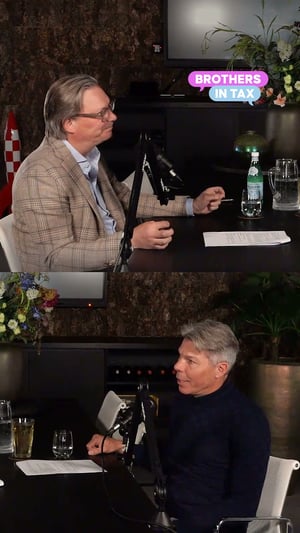
Twenty-five years ago, juniors queued at the fax machine and the tax authorities answered by letter, weeks later. In episode 2 of the Brothers in Tax podcast by Keeyns, Ruben hosts as he and Ramon van Aarle trace how tax work moved from paper to software, and tell the client case that became Keeyns: a group facing fines for late VAT returns across 16 European countries. Plus their advice for tax teams buying technology now.
Episode 2 · 17 min · June 10, 2026 · Hosts: Ruben and Ramon van Aarle
Short on time? Read the 5 key takeaways or jump to the FAQ.

Five things to take from this episode
Juniors researched in the library, stacks of paper returns waited on desks, and Ramon recalls that emailing the tax authorities has only really been allowed for about ten years. [05:18]
A client operating in 16 European countries was facing fines for late VAT returns. Its message to the brothers: "I'm not fully in control of my taxes." That case became Keeyns. [06:04]
A custom SharePoint workflow solved it for one client. When a second client wanted the same, the quote doubled. So, Ramon says, "we had to build it ourselves from scratch." [09:04]
Ramon puts the push for technology down to more compliance and less capacity: "there's not enough talent out there to help you out." [13:26]
His advice to tax teams: "Don't plan big, but start small." And "Don't expect a Ferrari with a tailor-made seat in it tomorrow." [14:08]
Short on time? Start with these
Questions answered in this episode
From libraries, letters and paper returns to online research, email and now AI. Ramon recalls juniors queueing for the fax machine, and says emailing the tax authorities has only really been allowed for about ten years. [Listen at 00:47]
Because every country brings its own rules and deadlines, and late returns bring fines. The client case behind Keeyns operated in 16 countries in Europe and told the brothers: "I'm not fully in control of my taxes." [Listen at 06:04]
AI is part of it, but the bigger driver is capacity. Ramon calls it the three Cs, more compliance and less capacity, and says "there's not enough talent out there to help you out." [Listen at 12:56]
Small, and soon. Ramon's advice: "Don't plan big, but start small", and don't expect to stay with one tool for 40 years. On waiting: "Do you think it's gonna be easier once you start with tooling in 12 months, 24, 36? I don't think so." [Listen at 14:08]
Look at what you already spend on advisors. When a tax team says it has no budget, Ramon's answer is: "Yeah, but you have the budget for Big Four." Moving that spend is change management, and "I think it's psychology rather than being good at tax today." [Listen at 14:34]
About the hosts
Ruben van Aarle
CEO and co-founder, Keeyns
Started his career at Arthur Andersen (later merged into Deloitte), co-founded the tax advisory firm Taxperience in 2006 and co-founded Keeyns in 2017. Follow on LinkedIn
Ramon van Aarle
COO, co-founder, Keeyns
Started at Ernst & Young, moved to Arthur Andersen and co-founded Taxperience with Ruben. Follow on LinkedIn
Together they have 25+ years in tax as advisors, entrepreneurs and now software founders.
About Brothers in Tax
Brothers in Tax is the podcast by Keeyns. Ruben and Ramon van Aarle have 25+ years in tax as advisors, entrepreneurs and now founders of Keeyns, the tax management platform for multi-entity companies. Each episode is their unfiltered take on the industry they've helped shape: the wins, the mistakes and the lessons in between.
See all episodes · Subscribe on Spotify · Subscribe on Apple Podcasts
Keep listening

How two brothers both ended up in tax, from Arthur Andersen to founding Taxperience.
Listen now
Why the brothers stepped out of advisory and bet on software.
Listen now
More filings, more complexity, fewer people: the three Cs squeezing tax teams.
Listen nowFull transcript
Lightly edited for readability.
Ramon [00:00]: Make money. That was basically the dream. Yeah. We had to build it ourselves from scratch.
Ruben [00:10]: Hello everyone. My name is Ruben van Aarle and I'm here with my brother Ramon.
Ramon [00:14]: Hello, my name is Ramon
Ruben [00:15]: And we are Brothers in Tax. So welcome to our podcast where we'll talk about our years in tax, what is happening with tax technology and our other business endeavours. We have been in tax for over 25 years, and today's episode will take a trip down memory lane and talk about tech evolution we have seen in the past 25 years, long time. Ramon, could you describe the technology landscape, how it looked, when we both just started?
Ramon [00:47]: Yeah, of course. Yeah. Well, I think we discussed on the last episode that we didn't have any email when we started our careers, right? Correct. So there was, there was going to the library studying books. I think the online case law came available back then, maybe 25 years ago, something like that. And then we combined, I think the books, the online versions, and we made our advisors back then, and I think only the managers had email managers up. So, they send out the memos to the clients and the advisors. I think that's true.
Ruben [01:29]: And then we did not even really rely on all the online information. Right. Because not everything was there at the beginning.
Ramon [01:36]: No, that's true. That's true. So
Ruben [01:38]: It also a different mindset.
Ramon [01:39]: Yeah. It was nation
Ruben [01:40]: We did not rely on it.
Ramon [01:42]: No, we didn't. So the library was very big. So the, so the juniors, they were there to do basically the, well, the preparation, of the memos and then have discussions with the managers or the partners. And then I think the advice went to the client. So it was very traditional and we just standing in line for the fax machine. You can remember that also, probably. Yes. Yeah. And then the partner came in and he had to go he could go first. Right, right. So you had to wait in line for 50 minutes at the That's right.
Ruben [02:16]: At the Big Four.
Ramon [02:16]: Yeah. And then I think a couple of years later, that would be early 2001, I think everybody at the company back then, so there was the Big Five we worked at Arthur Andersen got email and then things started to accelerate. But if you had a discussion with the tax authorities, that took for weeks, right? Right. So they were sending letters. They had to answer it weeks. Yeah. So that's
Ruben [02:46]: A lot of paper flow.
Ramon [02:48]: A lot of paper flow. So the, at the youngsters at the advisory companies, they prepared tax returns as you know. So I think in my room there was, yeah, piles like this on paper and with some dust on it because we rather prepared advice to clients than making the tax returns. So that, yeah, that's 25 years ago only. And if you compare it to today, what a difference.
Ruben [03:15]: And then we started Taxperience. So. How did we do that? That Taxperience? As they recollect.
Ramon [03:22]: Yeah, of course. Yeah. As you know, we learned a lot at Big Four. So, thank you for that, for all our colleagues. And if, I think if you start your own company, you're gonna copy things, what you have been doing while working with the balls, right? So, we invested in technology but didn't really have the money back then. So it was, yeah, it was Outlook. It was Excel. I know we had to we had put in the hours on the clients Right. For the invoicing, and I know that
Ruben [03:54]: It started with Excel.
Ramon [03:55]: Yeah, yeah. Started with Excel and then is
Ruben [03:57]: Drama
Ramon [03:58]: Time writer, that's the name time writer. And it cost 160 euros a year. So that was really modest. But if I look back and you had to do it all over again invest more in technology back then, but we didn't, so we just got started.
Ruben [04:15]: But we also had not really an idea about the technology landscape, right?
Ramon [04:20]: No, no. That there was no, but there was, that was too soon, I think. Yeah. So yes, you had the applications to make the tax filings and we had that Right. But we didn't have the sophisticated software they had back then at Big Four, but we could do our job. That was the most important thing. Right, exactly. But it was a scattered landscape on it. We had tonnes of, tonnes of tooling back then. Tonnes of application didn't really work. Right. I think after 5, 6, 7 years we did a migration to a new system, maybe.
Ruben [04:52]: Yeah, I think so.
Ramon [04:53]: Unit4.
Ruben [04:54]: Unit4, yeah. It was a big step already.
Ramon [04:57]: Yeah. There was a big step. It was a big investment, but it helped, it did help us out, right. In the end.
Ruben [05:01]: Right. Yeah. Unbelievable. The, from paper to IT and, but also the journey and always the headaches, let's say moving from one way of working to another way of working. Right. So it's also, it's a shift.
Ramon [05:18]: It is a shift. And as you recall, the, you were not allowed to email with the tax authorities. And I think that's only for 10 years that it's really really allowed. Right. So, we still had the paper flows. We still had the paper tax returns. We still had to go to the post office. We still had stamps and all those things. I think in the first, well, 10 years for sure at Taxperience, but maybe longer.
Ruben [05:48]: And then we had some client, right. At Taxperience they were not really in control of their European, VAT compliance. Can you elaborate a little bit? Yeah. 'cause that was also a learning from us, let's say moving into it.
Ramon [06:04]: There was a big learning, it was very interesting case basically the birth of Keeyns, right? So, well, the, I think, UME went to the client and he said, well, I'm not fully in control of my taxes. They operated in, I think, 16 countries in Europe back then, and they were facing fines because their tax returns were filed late. But that was a costly adventure for them back then. And they basically asked us whether we could come up with an IT solution for them to be in control on taxes.
Ruben [06:38]: So we as atypical tax lawyers, right. Perhaps said, of course, yes, we can help you. But then,
Ramon [06:46]: Yeah, so the, I think you asked the client, so how do you see this project? Then he said, okay, let's invest let's do a 50-50. We do 50% of the investment. And Taxperience had to do 50% of the investments, which added up, I think to 200,000 euros, something like that. Something like that, yeah. And who do you call? Who do you call if you have a question on it? Well, we figured Microsoft, so we called Microsoft and they were actually very interested in doing that job because, well, the tax base is, it's worldwide, it's blue ocean. And they said, yeah, let's do that. So they, I think they prepared a quote for 199,000 so we could have dinner after the tooling finished, and actually they did a. Really good job in SharePoint. Right? Right. So they made a workflow system, tailor-made it for the client. And they were really happy, right?
Ruben [07:46]: Yeah. So our client was happy. We were happy. And then obviously another client called with more or less same issue, same problem. And yeah, of course we discussed with other clients what we did for this particular client where we solved it. So then what happened?
Ramon [08:03]: Yeah. Then what happened? Yeah. We wanted our money back, right? So it's a business. So the partner group at Taxperience back then, we just shared the story and tried to sell it again at the large international clients we had. And indeed we found one in Amsterdam, and then we called Microsoft again and we said, can you do the copy paste on the system you made for the client, because he's actually really happy and we can sell it, and we're going to, we go, Hey, this is gotta be great.
Ruben [08:34]: Make money with it. Right?
Ramon [08:35]: Make money with it. That was basically the dream. We had, because we learned while we were working in the pub during our study that could be very prosperous, right? So we, in the end, we wanted to be in it. So, but then there was a tough day because Microsoft said, wow, well, the lady, who made it she's not working at Microsoft and we don't have the time and it's not 200K, but 400K for the solution. So that was a bummer. That was a bummer, really. And then we were in a very important junction, I think, in our lives, really. So. A, we could go back to just being an advisor and skip the IT part, or B Yeah, we had to build it ourselves from scratch,
Ruben [09:26]: Which we did with Taxperience as well,
Ramon [09:28]: Which we did with Taxperience as well. Yeah. Yeah.
Ruben [09:31]: So we went all in again, right.
Ramon [09:33]: We went all in again. And, so that was in 2017. I think maybe 18. It doesn't really matter. So, but, yeah, well eight years ago, eight, nine years ago. And that's has been an interesting ride.
Ruben [09:47]: Yeah, right, exactly. Because we're Brothers in Tax and not per se IT developers. Right. So perhaps also nice how did we build a team?
Ramon [10:00]: Yeah, that was very interesting because the thing I always tell on parties or dinners while being a tax lawyer, if somebody is sick, you can do the work also, right? So you don't sleep or you sleep just a little bit. You do the work, you go to the client happy client and things are running, but we can't code, right? So we fully rely on our colleagues for the coding and building the platform back then also. So, but yeah, let's go back to the pub again. We met Johan over there who's currently our CIO and he helped us out. So he together with him, we hired two developers and we're very, I'm very proud that they're still working with us at Keeyns. So that was basically the start.
Ruben [10:53]: True. I just recollect another thing why we are perhaps a little bit atypical tax lawyers, what you mentioned in the other episode because I was now thinking we highly rely on other people's capabilities. This is not a pure strength of a pure technical tax lawyer. Right. They,
Ramon [11:15]: Yeah. Tax advisor maybe may, might be different when you work internally with a large team. I dunno.
Ruben [11:22]: I dunno.
Ramon [11:23]: That's interesting. But no. Yeah, we fully rely on, and we have a great team at Keeyns, obviously, but that was the starting point. And as you know, with two people coding that that doesn't go really fast, right? Yep. You don't build a Microsoft in 10 days that's it's gonna take time, right? It's gonna take time.
Ruben [11:44]: And where do you think that the future of tax technology will be going?
Ramon [11:47]: Oh, there will be very, very interesting if you look at what AI can do today also in coding. That's very interesting. But then what's AI without a solid back backbone in the platform, right? What can you do? And we have those discussions day to day. But the thing is, what's very interesting to me is that things are changing. I think starting, maybe starting this year, somebody pushed a button that technology is, people are more open to look at it, which is really exciting. But then the landscape is very big. So, well, we, I think we have to guide people towards the right, applications which are out there in the market.
Ruben [12:33]: Where did you think this push is coming from? Is that just because the buzzword AI or is that governances, or is it tax authorities or just, let's say the screen within tax departments and tax advisory firms that there is not enough resources.
Ramon [12:56]: I think all we didn't script this, but I think all, no, I think the people read about AI can do magic, but people don't really know how to use it internally. So I think the discussions in the boardroom also at the tax departments are more and more getting louder. And then we call it the three Cs more compliance, less capacity that will also lead to the use of tooling more. That, that's because yeah, there, there's not enough talent out there to help you out. So you have to use the right tooling to get the work done. And that's getting more and more. So again, I think that's gonna be very interesting to see what technology will do in the coming years.
Ruben [13:47]: Yeah. I'm also very curious, but we're gonna figure it out and loop by ourselves, right? It's part of the journey. It's part of the fun, it's part of running a company. And what do you think that the listener needs to remember from this episode? Well, what is your let's say, what's the takeaway?
Ramon [14:08]: Yeah, the takeaway for, to me, the takeaway would be even more open-minded on tooling. See what, what's out there. Don't plan big, but start small and don't think that you're gonna marry with the right tooling for marriage 40 years. That would be great. If you, I think if you have a ride with a nice ride with the tooling for 5, 6, 7 years, that's okay. And then you'll see what happened. But it will help you out. So don't wait and be more open-minded. Look what's out there in the market, how it can help you out. Yeah. And also fight for budget, right? Because I don't have the budget. I don't have the budget. Yeah, but you have the budget for Big Four, but as you and me know, so it's in there, but you just pay it to a software provider instead of large consultancy firms, right? So it's
Ruben [15:04]: So, it's change and transformation, right?
Ramon [15:06]: It's transformation. So the I told my friends a couple of weeks ago, I think it's psychology rather than being good at tax today, which gonna help us out because change management is sometimes very difficult for people. And I think I would encourage them to be even more flexible.
Ruben [15:27]: Yeah. I think that makes sense.
Ramon [15:28]: Those discussions. Yeah.
Ruben [15:29]: Yeah. And people expect really a lot already, let's say from the technology, but they sometimes forget it has to be built as well, right? So
Ramon [15:37]: It has to be built. So, if you look at cars, right? Don't expect a Ferrari with a tailor-made seat in it tomorrow, right? Just have an, have a nice ride with a, with just a decent car, and it will get better and better every day, every week, every year, right? So al so also tr have a little bit of trust in the software providers that it will get better, but you have to start at some point in time. And then what if you wait? Right? So what if you do nothing? Do you think it's gonna be easier once you start with tooling in 12 months, 24, 36? I don't think so.
Ruben [16:17]: I agree with you. Of course. Yeah. Well, it's already the end of this episode, unfortunately, and I want to thank our listeners and viewers. My name is Ruben and I was your host of this episode today. I want to thank my brother Ramon for being at my side.
Ramon [16:31]: Welcome. Thank you Ruben. And thank you for the listeners and see you next time.
Ruben [16:35]: See you next time.