


More filings, more complexity, fewer people: 3 Cs squeezing tax teams
Tax teams at international groups are caught in a perfect storm. Compliance only grows because no filing ever goes away. Complexity piles up as governments patch old rules. And fewer tax graduates are coming through to do the work. In episode 4 of the Brothers in Tax podcast by Keeyns, Ruben and Ramon van Aarle unpack all three.
Episode 4 · 25 min · August 3, 2026 · Hosts: Ruben and Ramon van Aarle
Short on time? Read the 5 key takeaways or jump to the FAQ.

Five things to take from this episode
New countries, new entities and new rules all add work, and nothing drops off the list. "Never a filing goes away, right?" [03:37]

Short on time? Start with these
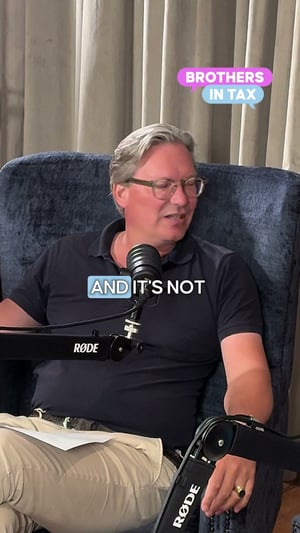
03:30 · 52 sec

01:22 · 43 sec

07:47 · 62 sec

13:03 · 62 sec

12:42 · 69 sec

22:08 · 58 sec
Questions answered in this episode
Because the number of filings only goes up. Governments keep adding taxes and reporting duties, like e-invoicing, transfer pricing reporting and CbCR, and old obligations rarely disappear. Every new entity adds its own filings, whatever its size. And fewer people are available to do the work. [Listen at 02:36]
The three Cs are how Ruben and Ramon van Aarle describe the pressure on tax teams: more compliance (more filings), more complexity (patched systems and countries that disagree on the same transaction) and less capacity (fewer tax professionals to go around). Together, they call it a perfect storm. [Listen at 02:09]
That's the question the CFO asks, and according to Ramon, many tax departments can't answer it. They feel in control but can't show it. Ruben's advice is to stop relying on spreadsheets: "instead of Excel, try to look for a software solution to do it better." [Listen at 06:32]
Partly. Ruben expects AI to give relief by reading through case law and new legislation quickly and suggesting answers, but people still need to verify the output. Tax authorities are adopting the same technology. The compliance load itself isn't going away. [Listen at 15:31]
It's easier when leadership pushes for it, and the CFO, CIO, IT and legal will all want to check fit, budget and ROI. When the CFO says "it's your ball game", Ruben's advice is to take full responsibility and fight for a budget: "ask for forgiveness, not for permission." [Listen at 21:49]
About the hosts
Ruben van Aarle
CEO and co-founder, Keeyns
Started his career at Arthur Andersen (later merged into Deloitte), co-founded the tax advisory firm Taxperience in 2006 and co-founded Keeyns in 2017. Follow on LinkedIn
Ramon van Aarle
COO, co-founder, Keeyns
Started at Ernst & Young, moved to Arthur Andersen and co-founded Taxperience with Ruben. Follow on LinkedIn
Together they have 25+ years in tax as advisors, entrepreneurs and now software founders.
About Brothers in Tax
Brothers in Tax is the podcast by Keeyns. Ruben and Ramon van Aarle have 25+ years in tax as advisors, entrepreneurs and now founders of Keeyns, the tax management platform for multi-entity companies. Each episode is their unfiltered take on the industry they've helped shape: the wins, the mistakes and the lessons in between.
See all episodes · Subscribe on Spotify · Subscribe on Apple Podcasts
Keep listening

25 years from paper returns and the fax queue to AI, and the client case that became Keeyns.
Listen now
Who to hire first, why the CFO cares about tax data, and how juniors should learn.
Listen now
Why the brothers stepped out of advisory and bet on software.
Listen nowFull transcript
Lightly edited for readability.
Ruben [00:47]: Hello everyone. My name is Ruben van Aarle and I'm here with my brother Ramon.
Ramon [00:51]: Hello, my name is Ramon
Ruben [00:53]: And we are
Ramon [00:54]: The Brothers in Tax
Ruben [00:56]: Welcome to our podcast where we'll talk about our years in tax, what is happening with tax technology and our business endeavours. A lot has changed over 25 years in tax, and as mentioned before, it feels like someone has pushed a button at the beginning of 2026. How will the world of tax evolve? Well, we always talk about the three Cs from all. Can you elaborate a little bit about the three Cs?
Ramon [01:22]: Yes, of course. But first, what happened with your leg? Because it's, you have the injury or
Ruben [01:28]: Yeah, next to Brothers in Tax We were also last week brothers in enduro driving and I was actually a little bit less lucky. Right.
Ramon [01:39]: And maybe you're better in tax than in driving a motorbike. Right.
Ruben [01:42]: Apparently. Apparently. And I was actually not even driving the bike. Right. Standing still.
Ramon [01:48]: I know. Very unlucky. So hope you get well soon. So next week injury?
Ruben [01:52]: Next? No, the next the injury I have next week,
Ramon [01:56]: The surgery. Oh, the, sorry. Yeah, the surgery. Okay, now, so let's talk about tax better than, talking about motorbike, right?
Ruben [02:01]: Absolutely.
Ramon [02:03]: Yeah. The three Cs, well you came up with the idea. So what are the three Cs?
Ruben [02:09]: Yeah, so, we think there is kind of a perfect storm in the corporate international landscape, right? There is an increase of complexity. There is an increase of compliance and there is everywhere where we talk, let's say to yeah, the tax advisors, but also the in-house tax people. There is a decrease of capacity, right? That's as people
Ramon [02:36]: Yeah, that's true. Let's focus on the first, the compliance part.
Ruben [02:40]: Exactly. On the compliance part. What do you see? Let's say you have been in tax almost also 25 years filing tax returns.
Ramon [02:52]: It's, the burden is becoming more and more bigger I would say. And I think we discussed in the previous episode that the tax advisors, they're not really fond of making tax returns. But if you look at the big companies, well, they have to do the VAT, they have to do the corporate income tax, they have transfer pricing files and whatever. And now we have Keeyns, we come up with new, we learn from new taxes that we need, for example, in Brazil all filings, which have to be done and get more and more well heavy for the tax teams to get that done. And it's not, I think it's not what they really want to focus on when they wake up in the morning.
Ruben [03:37]: It's probably true, but also I think also, let's say the. Never a filing goes away, right? So, there are a lot of new taxes because governments just invent new tax systems rules, new rules. So it's only more compliance than less compliance, right? It's,
Ramon [03:57]: Yeah. And it's getting bigger and bigger. And I don't think that they really have the people to do the job, which is very stressful for them because, well, if you are late with your filings you end up in being fined by the government and then it's get bigger and bigger, the mess you make internally. So it's really stressful for tax teams to deal with all those filings worldwide.
Ruben [04:23]: And that's true. And then of course, there are also, and if we keep on the compliance new countries in let's say or new countries, existing countries introducing new filings, right? Or where tax becomes really dominant. Now, for instance, the MENA region, right? The e-invoicing is big. They the transfer pricing reporting CbCR came into place corporate income tax returns need to be filed. Although the it's
Ramon [04:55]: Once a year, mostly
Ruben [04:56]: Right, once a year. But even if, let's say the amount, or let's say the corporate income tax rate or the VAT rate is low, the compliance burden is the same, right? That doesn't matter.
Ramon [05:09]: It's, no, that's true. It's the same whether you have a billion turnover or 10,000 dollars, a euros in turnover is, it's still the same filing. You have to do it. And also what you see with the international groups, when they incorporate new entities in a, into a new region, it adds up, right? So they have to dig into what filings they have to be done, who's gonna do it. And it's just, yeah, like I said, it's a big burden, for them. And instead they also got tonnes of emails from business sides of tax. And I think they really like to answer that more than doing the tax filing. So it's every day probably have a thorough look on what you're gonna do that day. Is it gonna be a filing or is it gonna be the tax side of the business? And, how do we get things done before we get fined,
Ruben [06:07]: Right? And the things need to be get done, right? Because if you're late with the filing, it's late it's in a white the, there is probably a fine to be issued by a local tax authority. If you get let's say a lot of filings too late, you run the risk that you enter into tax questionnaires or a tax audit.
Ramon [06:32]: Yeah, yeah. That's true. That's true. And that's also what we see when we talk to the international groups and then they say, oh, no, I don't really see that as a problem. I think in control on your compliance and sometimes the CFO ask the question, but how do you know that for sure. And then, which is a good question. And then basically the tax department, they don't really know whether they're fully in control on the compliance matters. So that's, yeah. It's a big thing.
Ruben [07:02]: Absolutely. And if we then, let's say focus on another C, right? So the, let's say on the complexity, so. Just the Dutch tax for say we try to make it more easy for you.
Ramon [07:17]: Yeah. Is that true? Do you really believe that they try it?
Ruben [07:20]: Oh, I don't think so. So I think it only becomes more and more difficult all the filings. Perhaps for personal income tax return in the Netherlands, it, it's fantastic, right? The pre-filing, basically you just click, click, click, and yes, this is correct.
Ramon [07:38]: That's true. That's fairly easy nowadays. Yeah.
Ruben [07:41]: But for companies, right or businesses who file their,
Ramon [07:47]: It's an ongoing process of changes and it becomes more difficult if you look back. Yeah. We were at university for a couple years together, right? Studied the old law. If you look at the income tax and then things were about to change when introducing the new income tax 2001. Today we live in the year 2026, as you know, and just government and also the political parties. Nobody really dares to make it to make a change, a real change, right. Probably they need to do Control-Alt-Delete and start all over again. That's my opinion at least. So it becomes, when you don't do the big changes, it becomes more and more complex.
Ruben [08:30]: Yeah. It's basically duct tape over duct tape over duct tape over, try to yeah. Solve things which are basically unsolvable.
Ramon [08:39]: There you go.
Ruben [08:39]: And as a result, indeed, the tax only becomes more and more, complex,
Ramon [08:43]: Right? More complex. More complex. Look at your leg next week surgery. That's not nice, but it's necessary, right? So you could do some nice, put some things on the knee and hope that it will go away. That's like in tax, it, that doesn't fly. So it becomes more complex. And then you have to lean on your own knowledge, the knowledge of your team. If you look at the companies, then the knowledge of your advisor just to cope with the increasing complexity, because this is only the Netherlands, what we're talking about, but it's, I think this is worldwide problem and issue for tax people working in the international groups.
Ruben [09:27]: Absolutely. I think also, let's say if you talk about Brazil or let's say China, where let's say those countries, they really protect their own businesses, obviously, and try to tax as much as possible. So you also get, let's say, if you talk about the complexity people look different at exactly the same or tax topic or the same invoice, or the same, and they look the same at payment, but the outcome is totally different, which makes it, again, much more complex to what, what's the real solution, right? So companies ending up. In sometimes in double taxation. Which is something the CFO actually doesn't like, right? No one likes double taxation. No. Just because of qualification, differences, et cetera.
Ramon [10:22]: Yeah. It's, it is becoming, I think it's becoming more and more a mess. If I look at the work I've been doing for more than 25 years in tax, it never really got more easy during the years. Came more complex it adds up with new legislation going into place, whether that's from a worldwide perspective or a European perspective, then indeed, you're absolutely right. And some countries look at it differently. They say, oh, I'll pass on this one, basically. Yeah. But you also see sometimes central Europe to say, okay, we need to do is let's stall it for a couple of years. So, how do you get grip on all those processes? It's a real burden. So again, if you combine the two Cs, right, so the compliance and the complexity, more compliance, more complexity, right. New legislations and then Yeah. But then, yeah, then you have to run into the third C, which is capacity, right? So, and that's also a problem. And what do you think about the capacity side of
Ruben [11:29]: So let's say when both of us were basically studying tax law 25 years ago we were in a room where there were 300, perhaps even 400 students.
Ramon [11:42]: Students, yeah.
Ruben [11:43]: And if we talk today to some of the professors with who also give us, let's say, new ideas and talk about new legislations. They, their classes are 40, 50, 60 people, right? Of fresh students coming out of, let's say gymnasium. So that, that's gonna be a huge problem. I think going forward. That more complex work less or more complex, more compliance because there are only more filings instead of less filings. And that needs to be done with less people in the end, or different kind of people with other skill sets, because the, there is just, there are just not enough resources anymore.
Ramon [12:27]: Fully agree. Let's talk about that in a minute. It's absolutely true. That struck me big time when the professor told us indeed, that they're 20% maybe, of the students from 20, 25 years ago. How are you gonna cope with the work? And also we learn from the industry that people say, I don't want to hire too many people also. So then how are tax teams going to deal with the tax works? And that's today, but also for the years to come, because this will probably never end
Ruben [13:03]: Now, and then next to basically the AI component now, which may give some relief, and actually help, let's say to get more done in less time. But tax authorities are going to do the same, right? So they also, so. And what we see in the Netherlands is that tax authorities really compete. Yeah. And actually have sometimes even better secondary employee benefits than we as a tax firm back in the days were offering to our employees. That's true. We just couldn't afford them. Right. So it's also it's kind of crazy if you think about it from an entrepreneurial point of view that
Ramon [13:45]: Yeah, it's
Ruben [13:46]: Tax authorities just take away the employees and say, yeah, you your day working starts when you enter the train. And if that's two hours from the real job. And it's crazy, right? How we would never be profitable No. If we would say to employees just to sit in the car, be come whenever you like. And then, yeah.
Ramon [14:11]: I think I cried all night. When we still had the advisory practice that a very nice colleague of ours indeed he went from a full-time agreement to four days a week and he earned more at the government. And his day started when he entered the train. It's while, as you know. My head at least. It's the government should be there for the business practice and not the other way around. Right. So, but this is also a thing. I don't know whether this is a worldwide system that governments pay more or have better, well, better agreements for people working in the tax industry. But indeed, in ns it's a big thing. It's a big thing.
Ruben [14:59]: I'm afraid it, it's kind of a shift. So, perhaps NS is kind of a frontrunner here, and I'm not sure whether we should be proud of this kind of frontrunner. Probably not. But yeah, they're creating only also more complexity, right? So, yeah. Yeah. More people, more rules.
Ramon [15:16]: Yeah, I would, yeah, yeah, I know. But you have the injury on the leg. We don't want people to get depressed, so we have the disease, but what's the outlook where the sunny side of things happening today? I mentioned AI already,
Ruben [15:31]: Certain, the sunny side is probably not, it is gonna give relief, right? So, technology should, let's say, ease a little bit of pressure from the work people face today. And hopefully, let's say AI can help, let's say also with some complexity or to read very fast, obviously through court cases, new legislation come up with suggestions. Although of course you need people to verify, but hopefully, let's say, yeah, knowledgeable people will pick the right things out of, what AI has been producing or came up with, I guess.
Ramon [16:14]: Yeah. They can do more in a day. Yeah. We discussed earlier, and we don't have to sit anymore in the library for no eight hours to do the case law study. So
Ruben [16:25]: With the industrial revolution, everyone was afraid to the machines, right? Well, it actually only helped then. Everyone was afraid of the internet. It actually only helped probably the same now with the AI wave coming over us. But this hopefully should solve a little bit the capacity and probably also the complexity issue a little bit. The compliance will be there anyway, if we train the world's good enough. Yeah. Hopefully they're gonna help also with the co compliance part, so,
Ramon [16:59]: Ah, that's true.
Ruben [16:59]: In the end, there should be relief, I guess.
Ramon [17:01]: And this is this what you see from the beginning of this year? Mostly? Yeah. When you say somebody pushed a button in a different mindset on looking how to cope with all the tax work to be done for the companies, AI and a different method of
Ruben [17:20]: Yeah, I think yes. There was so much buzz around ChatGPT, Claude other, LLM models that. Basically top down approach. People started to ask questions, what are you doing? And as a result, you see a lot of. Let's say also in the tax departments, tax advisory firms, AI and all kind of new technology dripping through. And I think that's also why you say, okay, it looks like someone pushed the button and all of a sudden, let's say people are also more interested to learn more what kind of tax technology platforms are out there, how can it ease compliance complexity, help with the capacity issue? Because there is economical downturn. Doesn't mean that, let's say less work needs to be done. There is just less money. So perhaps with even a reduction of workforce, you need to do at least the same filings, right?
Ramon [18:25]: And or more,
Ruben [18:25]: Yeah. And sometimes even more. It's a restructuring. So that, that's what we see a lot.
Ramon [18:31]: So that, but that's a fair, very challenging way ahead of the, of us. Then if you look at the tax departments, 'cause they need to combine all the AI and tooling things out there together with the increasing complexity and compliance. So it's I think we see that shift also going on when we talk to the international groups.
Ruben [18:55]: That's true. Sometimes looks like double work as well. Right? Because, if you move from, from one system or way of working to another system or way of working, it also takes time. Right? So the, to get familiar with new software or a new platform or new ideas and get that implemented into an existing organisation that that takes time.
Ramon [19:20]: Yeah. At first it, it's even increasing the workload. Absolutely. Because you have to look at the tooling, have to do the demos, see what's the best fit for you and the company for 1, 2, 3, 4, 5 years or maybe more. While the compliance still, well, yeah, it's, it never go, it's never going away. So it's challenging you. I also see that when I personally talk to the tax departments, they, that they are doubting what to buy. Do you think they're too hesitant to Well,
Ruben [19:58]: I'm not sure. Of course they want to make the right decision. And if you don't know what's out in the world, then rep decision making takes a little bit longer and you need to evaluate our many stakeholders. But sometimes I do agree, let's say it just takes too long. They just make a decision get started. 'cause it's, it'll only hold you back and bring more issues later on. But I do understand that they like to see which solutions are there in the market and yeah. Take a good look, of course, which takes time.
Ramon [20:36]: So yeah, there's, so, there's so many solutions out there today. Do you feel that the tax department is alone in that process or is there the CEO, the CFO, IT, legal in on the project or maybe even the business or how?
Ruben [20:54]: Well, it helps of course a lot. Let's say if there is a push down. So if, or if there is budget, so if CEO says I want more IT or more platforms into the organisation in order to, let's say, become more let's say 2030, 2035 proof basically, right? And more future proof, that definitely helps. And we do see that CFO, CIO, IT people, legal departments, everyone would like to look on platforms, whatever it may be in order to see whether it a fits into an organisation, whether it fits into the entire IT landscape, whether it fits into budgets. What's the ROI of the project? Does it really, is it really necessary?
Ramon [21:46]: That makes sense. All
Ruben [21:47]: It's,
Ramon [21:49]: Yeah. But also I see a fairly large group of people there where the CFO says, Hey tax, it's your ball game. And don't whine about it every day. Just do it.
Ruben [22:02]: It's true. Figure it out. Buy something is
Ramon [22:07]: Order to get and then what? Because it's going to happen anyway. So if you are, if you're stuck in between in such a company, what will be your.
Ruben [22:17]: Sometimes it's one of the people in the US once told me, ask for forgiveness, not for permission. Just do it. Right. So if, so I think you're right. If you are a tax director or heading a tax department, take full responsibility, fight for a budget, get it done, solve your three Cs, right? With a platform that fits your purpose or other software solutions that fit your purpose. And just do it and ask for forgiveness if people say it was too expensive, but yeah, you have to make this decision once, right? It's like if you're a factory, you also invest in new machines because after 30, 40 years probably there is a better one in the market already,
Ramon [23:08]: And then you buy that particular machine. That's right.
Ruben [23:10]: So instead of Excel, try to look for a software solution to do it better.
Ramon [23:17]: Now, I think the majority of the people are working on tooling that that's the push the button from the beginning of the year story. Right. And I think that's very interesting to see. Luckily for us, we have, we may help those companies in particular cases to get the business case done. And that's also new. And we're invited in tax days for the larger firms just to talk about tax technology, which is very very nice. And we learn a lot from each other. So that's, that, that's a new thing that didn't happen 20 years ago.
Ruben [23:48]: No, it's true. And everyone, every demo you know, we more or less see and hear the same things. Right. It's. It's not that people work differently all over the world. It's there is a lot of commonality ev everywhere and processes in how people deal with things. How they talk to each other. Yeah, of course. Legislation is different in every single country.
Ramon [24:16]: Yeah. But it's like a family, the tax people. It feels like a family. It's, I agree with you. It's a worldwide way of doing the tax work. Dealing with the tax work. Yeah. It's really cool. Yeah. So you can, you and you can relate to all the stories they tell and the challenges they face. So, exciting times ahead,
Ruben [24:35]: I think too. Well,
Ramon [24:39]: I, lake
Ruben [24:39]: Legs still. Okay. It's
Ramon [24:42]: Still there.
Ruben [24:42]: Great. It's still there. I don it doesn't run away luckily, but I think it's, yeah. Almost the end of this episode. Again, so I want to thank our listeners. My name is Ruben and I was your host, of this episode. I want to thank my brother, Ramon, for being on my side.
Ramon [24:59]: Thank you all for listening.
Ruben [25:01]: Stay tuned to next month's episode. We will discuss what tax team of the future must look like to navigate through this changing environment. So thank you all for listening. See you next time.
Ramon [25:15]: Bye-bye.
Ruben [25:16]: Bye-bye.