Skip to content

Everything you need to know to get started with Automated Tax Workflows

Everything your tax team needs to eliminate manual processes, reduce risk, and reclaim capacity — from foundational concepts to hands-on tools.
THE BASICS

What are Automated Tax Workflows?

An automated tax workflow is a digital, step-by-step process that uses software to manage and execute tax-related tasks automatically — replacing emails, spreadsheets, and manual document exchanges with a consistent, controlled system.

Recurring activities across the tax lifecycle — from filing preparation and document collection to internal approvals and advisor handoffs — are handled in a consistent, timely, and controlled way. Instead of relying on scattered emails and version-confused spreadsheets, every task has a clear owner, a deadline, and an audit trail.

For in-house tax teams, this means standardising processes across jurisdictions while keeping the flexibility to adapt workflows to local requirements — all visible from a single compliance dashboard.

CRASH COURSE

How to get started with Automated Tax Workflows

A structured 3-module programme designed to take you from understanding the fundamentals to building your first automated workflow.

WATCH ON-DEMAND

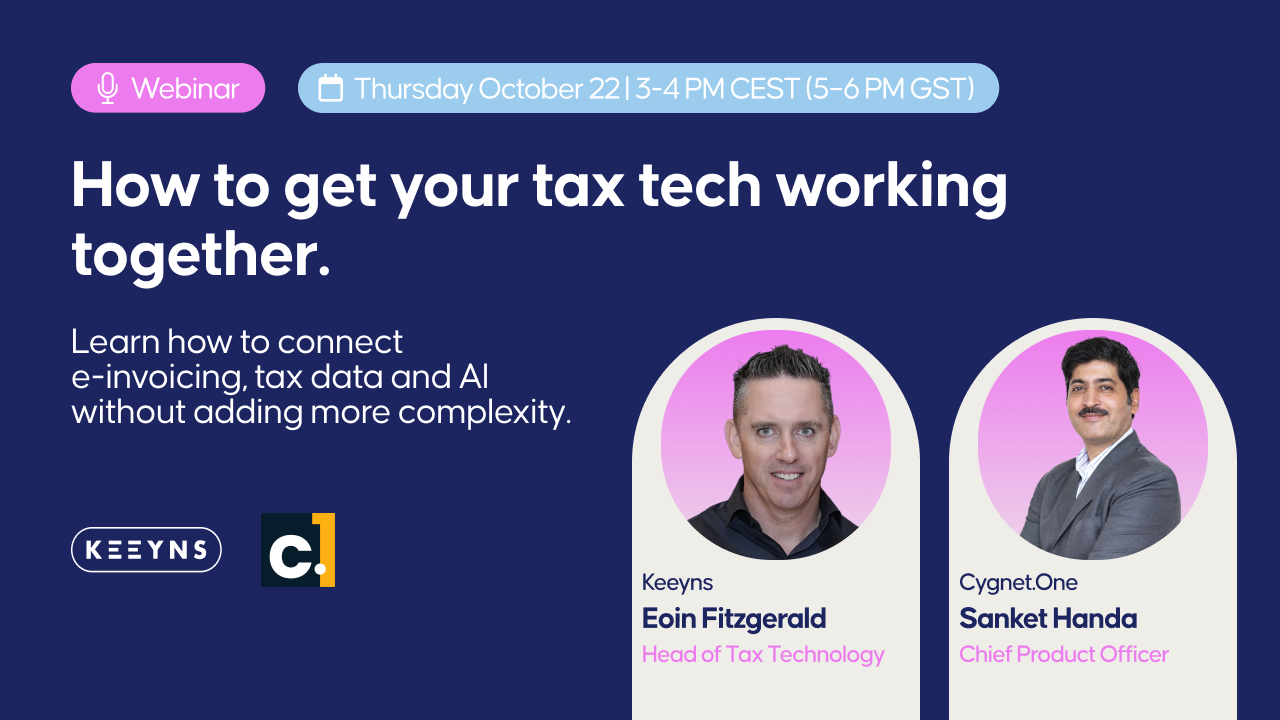
Webinar: How to get started with Automated Tax Workflows

Keeyns CEO Ruben van Aarle and Senior Engagement Manager Megan Gainer walk you through the practical steps to automate your tax processes. 

What you'll learn

  • What automated tax workflows are and how they replace manual processes.
  • Why automation is essential to handle growing compliance, filings, and AI-driven tasks.
  • How to get started with automated workflows, explained step by step by our experts.
CUSTOMER STORY

How Dayco brought calm to global tax chaos

Dayco operates globally with a Tax team of just five people who keep up with tax legislation in over 20 countries. Add a mix of global and local advisors to it, and you end up with a flood of emails, shared documents, and exotic tax filings.

There was a pressing need for a tool that would give the Head of Tax and his team control, insights, and a future-proof way of working. Without it, the complexity of global compliance would quickly become overwhelming.

FAQs

Common questions about Automated Tax Workflows

Quick answers to the most common questions about automated tax workflows.

What type of tax processes can be automated? Most recurring, rule-based tax activities can be automated — from VAT return preparation and corporate income tax filings to wage tax compliance, deadline tracking, document collection, and internal approval chains. If it follows a repeatable pattern, it can likely be turned into a workflow.
How do automated tax workflows help with compliance risk? Automated workflows ensure every step follows a standardised procedure with clear ownership and deadlines. Combined with real-time compliance dashboards, your team can detect and address risks proactively — before they become penalties.
What tax automation tools can be used?

The tax automation landscape breaks down into a few distinct categories, each solving a different part of the problem.

ERP systems like SAP and Oracle handle the financial backbone — tax-relevant transaction data lives here. Most have built-in tax modules, but they're rarely enough on their own.

Tax provision and reporting tools like Thomson Reuters OneSource or Corptax handle the calculations and disclosures that come out of the close cycle — think deferred taxes, effective tax rate work, and statutory reporting.

Indirect tax compliance tools like Vertex and Avalara focus specifically on VAT and sales tax — automating rate determination, filing, and reconciliation across jurisdictions.

Tax workflow and collaboration platforms like Keeyns sit on top of all of this. Their job is to manage the process itself: who owns what, what's been reviewed, what's overdue, and where everything is. This is where your tax function actually operates — and where most of the manual coordination currently lives.

No single tool does everything. The question isn't which one to choose — it's understanding which gap you're filling first.

Ready to automate your tax workflows?

See how Keeyns helps tax teams replace manual processes with automated workflows, in a single secure platform.