
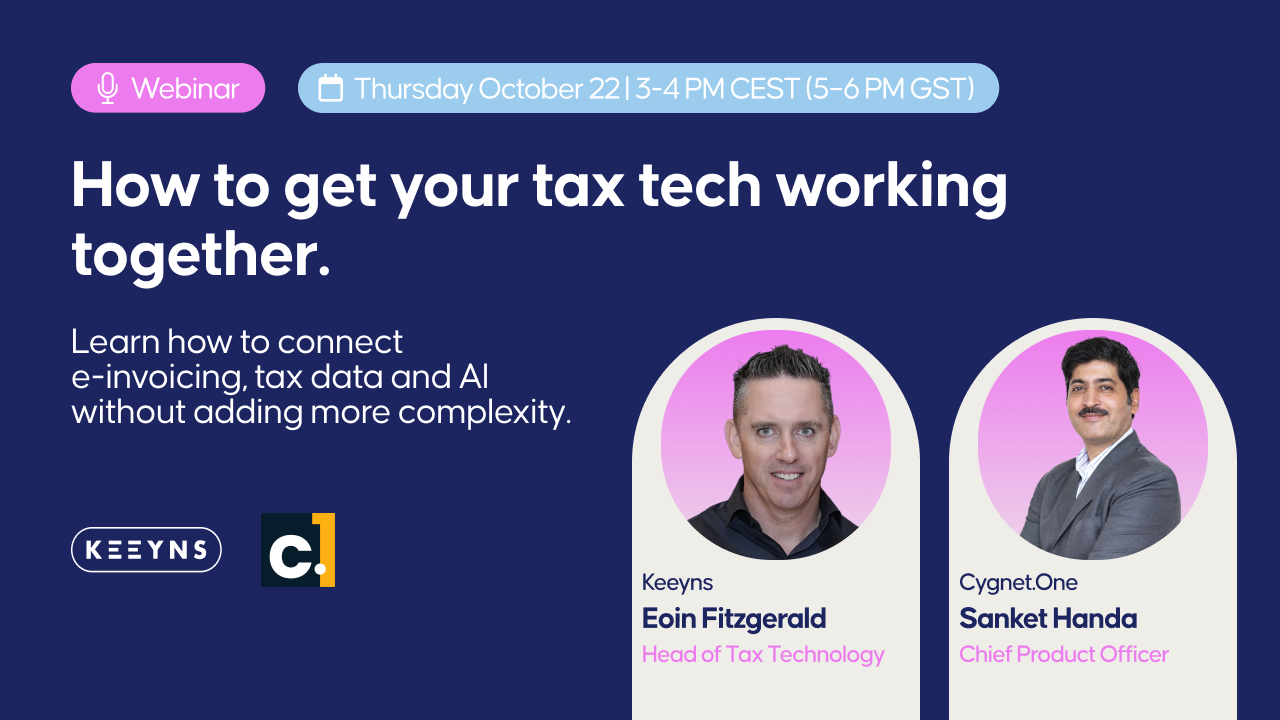
Live webinar
How to get your tax tech working together
Join us Oct 22nd
Glossary / Value Added Tax (VAT)
VAT is a consumption tax on value added to goods and services at each supply chain stage. Businesses collect VAT from customers and remit to government, whilst deducting input VAT paid on purchases from output VAT collected.
VAT applies to consumption of goods and services. The tax targets value increases at each production or distribution stage. Rates vary by country and product type as percentages of sales price. Effective VAT management ensures consistent cash flow, competitive pricing, and legal compliance. Poor management causes overpayment, penalties, and legal complications.
Accurate VAT Determination: Proper classification applies correct rates, avoiding costly overpayment or underpayment.
Efficient Input VAT Recovery: Tracking and documenting VAT on business purchases maximises reclaim amounts.
VAT Compliant Invoicing: Compliant invoices with clear VAT amounts and rates enable correct collection and reclaiming.
Utilising Technology: VAT automation streamlines calculations, reporting, and remittance whilst reducing errors.
Regular VAT Reconciliations: Consistent reconciliation identifies discrepancies early, preventing penalties.
Our software centralises tax data, and simplifies reporting to become more efficient, gain control and reduce workload. Need VAT insights and efficient global document sharing? Explore our solution at https://keeyns.com/solutions.