FAQ
Common questions from tax leaders evaluating workflow automation.
Still have questions? Book a demo and we'll answer them against your specific compliance cycles.
How is this different from generic workflow tools like Asana, Monday or ServiceNow?
Generic workflow tools give you a blank canvas. Keeyns ships with the workflow tax teams actually need: multi-entity templates, jurisdictional deadlines, document requests tied to dossiers, two-step approvals, and an audit trail your auditors will accept.
You could build all of that in a tool like Asana given enough time. Most tax teams don't have that time, and a generic tool won't understand the difference between VAT in NL and CIT in DE — Keeyns does.
Can we customise workflows for our specific compliance cycles?
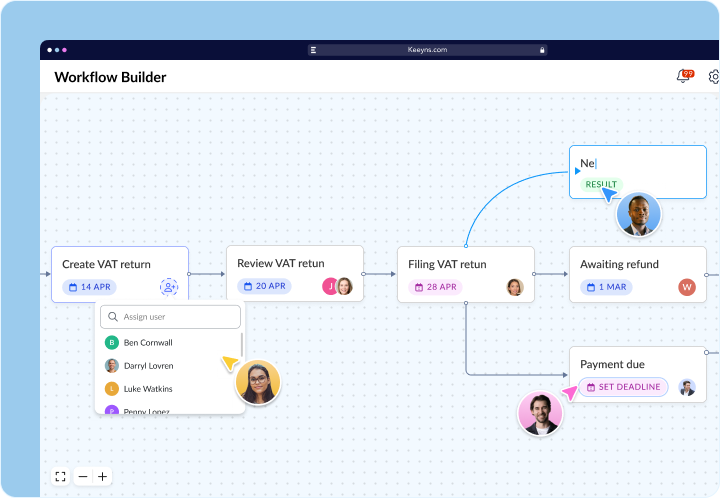
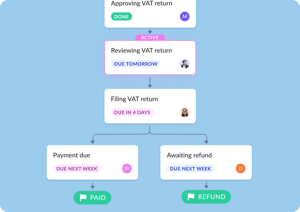
Yes. Workflows are templates you configure: triggers, steps, owners, SLAs, conditional branches and notifications. Start from one of our pre-built templates (VAT, Sales Tax, CIT, transfer pricing, wage tax) or build from scratch. Templates are reusable across every entity and every cycle — build once, run forever.
How long does implementation take?
Most customers are running their first automated workflow cycle within 4 to 6 weeks. The variable is the complexity of your existing process, not Keeyns. We provide a dedicated implementation lead: workflow mapping in week 1–2, template configuration in week 3, parallel run with your existing process in week 4–6.
Is our data secure when external advisors join workflows?
Keeyns is hosted in EU data centres with ISO 27001 and SOC 2 Type II controls. All data is encrypted in transit and at rest. External advisors get scoped access — only to the dossiers and entities you assign — and every action they take is logged in the audit trail. Revoke access in one click when an engagement ends.
How does this work with our external tax advisors?
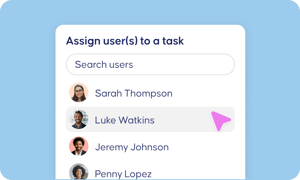
External advisors are first-class users in Keeyns. Invite them to a specific dossier, scope what they can see and do, and route workflow steps directly to them. Documents, approvals and comments live in one shared space — no separate email threads, no version mismatches. When the engagement ends, access ends.