
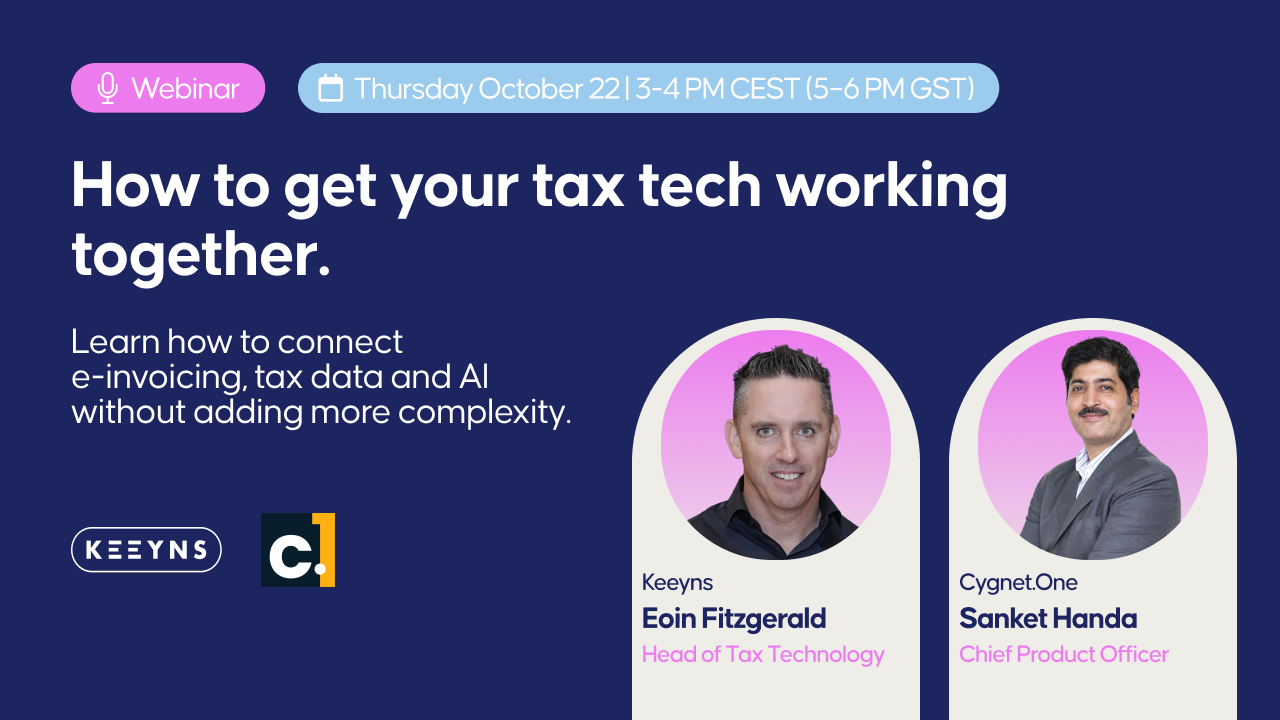
Live webinar
How to get your tax tech working together
Join us Oct 22nd

Part of the full series: The Evolution of the Indirect Tax Function | Written by Eoin Fitzgerald
The core image: A Roman rider stands with one foot on each of two horses moving at full pace. That's the indirect tax function in transformation—it must perform and reform at the same time. The tension between the two isn't a problem to be solved, but a condition to be managed.
The compliance clock doesn't stop: While you're rebuilding data, technology, and operating model, returns are still due, audits are in progress, and deals need tax input. The same team driving transformation is also keeping compliance on track—and most don't have the resource to do both well at once.
Three pressures that don't pause:
How the best functions manage the tension:
Bottom line: The functions that come through strongest aren't the largest or best-resourced. They're the ones that understand their starting position, manage compliance with discipline, and sequence change so it builds capability without creating gaps.
The Roman rider stood with one foot on each of two horses moving at full pace - maintaining balance, directing both, letting neither falter. It is an apt image for the indirect tax function in transformation.
The work of rebuilding - the sequencing, the data remediation, the technology investment, the operating model redesign - does not happen in a controlled environment with the compliance clock suspended. Returns are due. Auditors arrive. Commercial transactions need tax input today. The function must perform at the same time as it reforms, and the tension between those two demands is not a problem to be solved but a condition to be managed.
The previous four chapters have described where the indirect tax function has come from, what the external environment now demands, how to assess where your business sits, and how to sequence the changes required. That is the strategic picture.
This chapter is about something different. It is about the fact that none of that change happens in a vacuum. While the transformation agenda is being designed, prioritised, and executed, the function still has a full calendar of returns to file. Audits are in progress. Deals need advisory.
The regulatory environment is not waiting for anyone to get ready. And the world beyond tax - the geopolitical shifts, the trade policy volatility, the legislative waves landing simultaneously across multiple jurisdictions, the business itself continuing to grow, restructure, and evolve - is generating new obligations and new complexity faster than most functions can absorb.
The tension between running the function and rebuilding is real, and it is underappreciated in most transformation frameworks. The answer is not to choose one over the other. It is to understand how they interact, where the pressure points are, and how to manage both without losing ground on either.
Compliance deadlines are fixed and non-negotiable - VAT returns, e-invoicing, SAF-T and other filings continue regardless of any internal transformation programme underway. The same team driving transformation is also responsible for keeping compliance on track, and most don't have the resource to do both well simultaneously.
Successful businesses are honest about capacity from the start - either ring-fencing resource or bringing in external support to maintain compliance throughput during transformation.
Tax authorities now arrive at audits pre-armed with cross-matched, benchmarked data - the conversation starts further along than it used to, and moves faster.
Audit readiness is a standing obligation, not a reactive one - the window between an error and an authority identifying it has shortened dramatically in many jurisdictions.
The governance infrastructure (obligation registers, submission dashboards, clear ownership) is not just operational overhead - it's the evidence layer that enables a fast, credible audit response.
M&A, restructuring and market entry don't pause for transformation - indirect tax sits in the middle of all of it. The function needs capacity and knowledge to contribute meaningfully to strategic decisions, not just process compliance - but that's only possible if it's not entirely consumed by operational workload.
Legislative change - new digital services taxes, environmental levies and e-invoicing mandates - keeps arriving regardless of where a business sits in its transformation journey. Organic and acquisitive growth add new compliance obligations, new systems to integrate, and new positions to assess in real time.
The tension between running the function and rebuilding it does not resolve itself. It has to be managed deliberately. The businesses that do this well tend to share a few characteristics.
They are honest about capacity. They do not assume that a transformation programme can be absorbed by a team that is already fully deployed on compliance operations. They plan for the resource requirement of both, and either hire, co-source, or prioritise accordingly.
They sequence change to protect compliance throughput. The sequencing logic in Chapter 4 - culture before data, data before technology, technology before operating model - is not just strategically sound. It is also practically protective. A business that improves data quality before it implements a new compliance platform is less likely to disrupt its compliance outputs during the transition. A business that does the technology implementation first, on poor data, creates compliance risk at the moment of go-live.
They use the compliance calendar as a forcing function. The discipline of filing accurately on time is not an obstacle to transformation. It is the standard against which transformation should be measured. A new system that cannot meet the compliance calendar is not ready. A data quality improvement that does not translate into cleaner filings has not achieved its objective.
And they maintain the governance infrastructure described in Chapter 4 - obligation registers, role documentation, and monitoring dashboards - as a standing asset, not a transformation deliverable. During periods of change, when team structures shift and external providers take on more of the compliance load, this infrastructure is what prevents handoff ambiguity from becoming audit exposure. The question every CFO will ask - are we compliant, everywhere, right now? - needs to be answerable regardless of where the function is in its transformation journey.
There is no version of this that is easy. The indirect tax function in 2025 and beyond is being asked to comply with a more complex and more demanding regulatory environment than it has ever faced, at the same time as it is being asked to invest in its own transformation, against a backdrop of geopolitical and commercial uncertainty that continues to generate new obligations and new pressure.
What it requires is a function that is clear-eyed about its own position - which is what Chapter 3 was about - and that has a plan for change that is realistic about what can be achieved without disrupting what has to be delivered - which is what Chapter 4 was about. And it requires an acknowledgement that the transformation will take place in the real world, not in a controlled environment, and that the real world will continue to generate complexity throughout.
The functions that will come through this period in the strongest position are not necessarily the largest or the best resourced. They are the ones that understand their starting position, manage their compliance obligations with discipline, and invest in change in a sequence that builds capability without creating gaps.
Of all the pressures described in this chapter, the one that is changing fastest, and that shows most clearly where the whole function is heading, is the audit. The shift from periodic document review to continuous, data-driven scrutiny is not finished. It is accelerating, and the arrival of AI on the tax authority side is about to change what an audit is, how it is triggered, and how a business is expected to respond.
The next chapter looks at tax audits in the digital era: what they become when the authority already holds the data, runs the analytics, and arrives with its conclusions substantially formed. That shift matters because audit readiness is no longer a periodic exercise. It is becoming the standing condition in which the function operates.
This chapter draws on publicly available research, reports, and guidance from the major accounting and advisory firms, including EY (Tax and Finance Operations Survey 2025 and the Worldwide VAT, GST and Sales Tax Guide 2026), Deloitte (Global Indirect Tax Survey 2023), KPMG (Indirect Tax Technology and Managed Services 2025), and PwC (Indirect Tax Controversy Guide 2022); the European Commission (VAT Gap Report 2023) and the OECD (Tax Administration 2024); and indirect tax compliance specialists including Marosa and Sovos (State of Tax Compliance 2025). Where specific data or observations are cited, the source publication is noted in the text. All market observations reflect published materials available up to early 2026.

Disclaimer:
Please remember Keeyns' articles are for informational and educational purposes only. Not for specific tax or legal advice. Always consult a qualified advisor before taking any actions based on this information.